There are stories that entertain, and there are stories that unsettle.
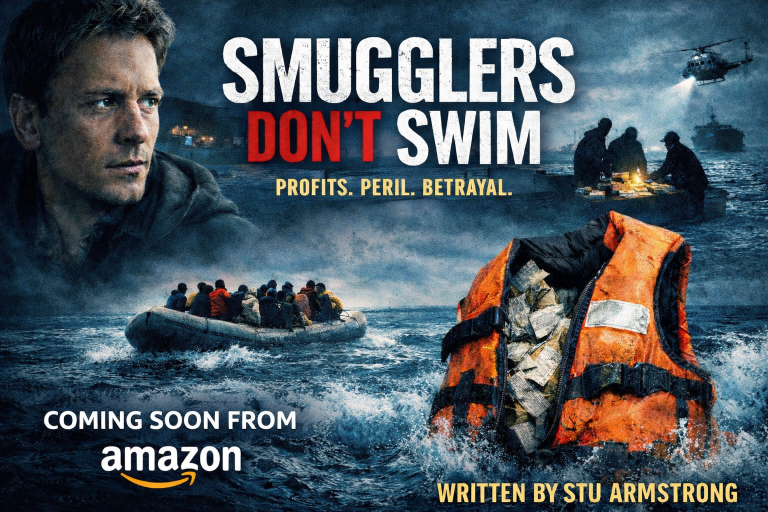
Smugglers Don’t Swim belongs firmly in the second category. Based on a true story, this dark crime thriller explores the hidden economy behind small-boat crossings from northern France to the UK—and the systems that quietly profit from desperation while claiming to manage it.
Based on a true story, this dark crime thriller explores the hidden economy behind small-boat crossings from northern France to the UK—and the systems that quietly profit from desperation while claiming to manage it.
This is not a book about villains in balaclavas or heroes riding in at the last moment. It’s about how modern systems really work: slowly, professionally, and without accountability.
Click here or paste the link below into web browser: https://amzn.eu/d/2ENIqKA
A System, Not Chaos
When a British journalist embeds himself on the beaches of northern France, he expects to uncover disorder—smuggling gangs, risky boats, people pushed into impossible choices.
What he finds instead is organisation.
Routes are planned. Prices are fixed. Life jackets are manufactured to look safe but fail when tested. Violence is not random; it’s deployed when necessary and outsourced when inconvenient. Police, NGOs, contractors, and criminals operate in parallel systems that rarely collide—but always benefit from delay.
The crossings continue not because no one understands them, but because too many people depend on them continuing.
Based on a True Story
While Smugglers Don’t Swim is a work of fiction, it is rooted in real events, real patterns, and real testimonies. The book draws from documented practices, publicly reported incidents, and lived experiences from the margins of Europe’s border crisis.
Names have been changed. Details have been fictionalised. But the structure—the way power operates, the way violence is sanitised, the way responsibility is diluted—is real.
This is social realism wearing the skin of a crime thriller.
When the Witness Becomes the Problem
As the journalist digs deeper, rival smuggling gangs escalate into open warfare. Professional killers are quietly brought in to “restore order.” Bodies disappear. Official explanations follow.
And then the focus shifts.
Not to stopping the violence—but to managing the witness.
What happens when telling the truth becomes destabilising?
What happens when exposure doesn’t save lives—but puts more at risk?
The journalist crosses an invisible line. He becomes morally compromised. Then psychologically broken. Then administratively erased.
There are no arrests. No trials. Just containment.
Violence Without Spectacle
The violence in Smugglers Don’t Swim is not written to thrill—it’s written to disturb. There are no cinematic shootouts or heroic last stands. Instead, the book shows how professional violence works: fast, quiet, efficient, and deeply impersonal.
When things go wrong, it isn’t law that intervenes.
It’s professionalism.
Themes That Linger
This book explores difficult questions without offering easy answers:
- Who profits from delay?
- How does humanitarianism become an industry?
- When does journalism cross from exposure into complicity?
- What happens to people who know too much—but not enough to be protected?
Above all, it asks one uncomfortable question:
Who is allowed to stay dry?
About the Author